

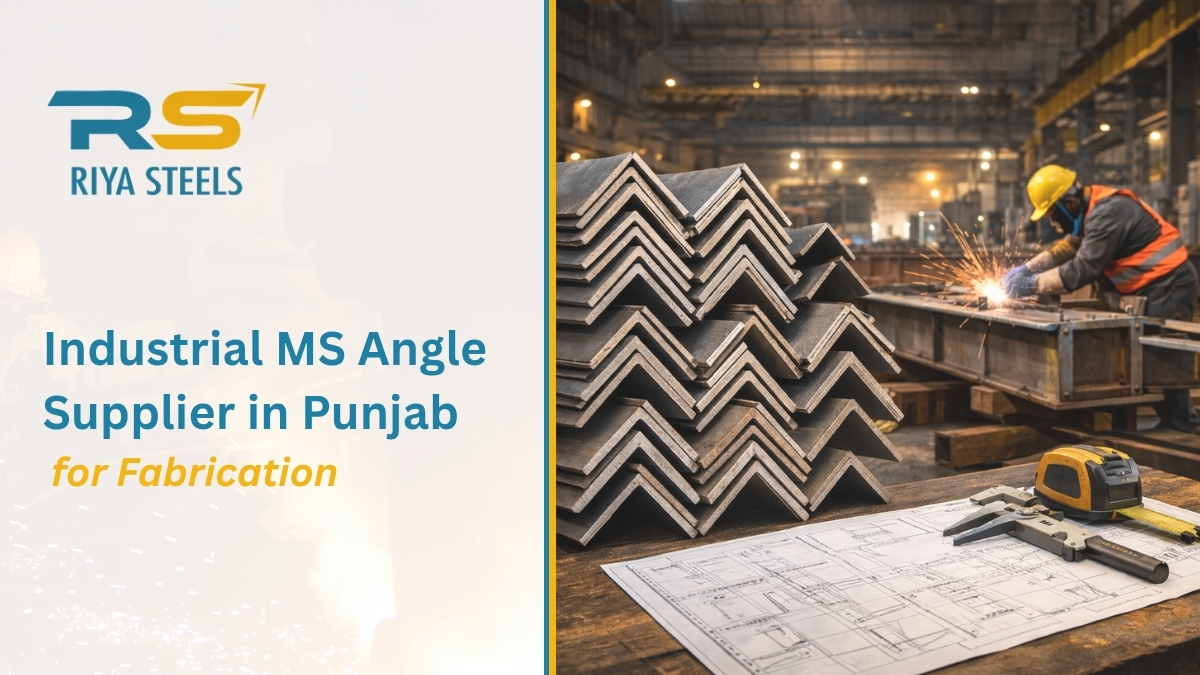
Punjab’s fabrication industry depends heavily on high-quality raw materials, and MS angles are one of the most essential components used in structural and industrial fabrication. From small workshops to large-scale fabrication units, the demand for precise, durable, and easy-to-work steel angles continues to grow.
A reliable industrial MS angle supplier in Punjab for fabrication is not just a seller—but a partner who understands technical requirements, consistency, and project timelines.
Role of MS Angles in Fabrication Work
In fabrication, MS angles are not just basic materials—they form the backbone of structural strength and design accuracy. Fabricators use them for:
- Frame fabrication (machine frames, base structures)
- Support structures for industrial equipment
- Shed and warehouse fabrication
- Custom metal fabrication projects
- Brackets, racks, and enclosures
The 90-degree L-shape provides excellent rigidity, making it ideal for load-bearing fabrication work.
Why Fabricators Prefer MS Angles
Fabrication professionals choose MS angles because they are:
✔ Easy to Cut, Weld, and Drill
MS angles support all standard fabrication processes without cracking or distortion.
✔ Consistent in Shape & Thickness
Uniformity is critical in fabrication to maintain alignment and structural accuracy.
✔ Strong Yet Cost-Effective
Compared to other alloys, MS offers a balance between strength and affordability.
✔ Suitable for Custom Fabrication
They can be easily modified for project-specific designs.
What Fabricators Expect from a Supplier
A fabrication-focused buyer looks beyond just price. The right supplier in Punjab should provide:
1. Dimensional Accuracy
Even small variations can affect fabrication quality and fitting.
2. Clean Surface Finish
Better finishing reduces pre-processing time like grinding or cleaning.
3. Ready Stock for Urgent Jobs
Fabrication projects often run on tight deadlines.
4. Bulk Supply Consistency
Same-grade material across batches is crucial for large fabrication work.
5. Technical Understanding
Suppliers who understand fabrication can recommend the right size and thickness.
Common Sizes Used in Fabrication
Fabricators in Punjab typically use MS angles in:
- 25×25 mm to 100×100 mm
- Thickness ranging from 3 mm to 12 mm
- Equal and unequal angles depending on load design
The choice depends on the type of fabrication—light structures vs heavy industrial frames.
Applications in Punjab’s Fabrication Industry
MS angles are a core material in Punjab’s fabrication ecosystem, supporting a wide range of industrial and custom-built structures. Their strength, shape, and adaptability make them suitable for both light and heavy fabrication work.
They are commonly used in:
- Industrial Shed Fabrication – Structural frames, roofing supports, and columns where stability and load-bearing capacity are critical.
- Machinery & Equipment Fabrication – Base frames, guards, and support structures that require precision and vibration resistance.
- Agricultural Equipment Structures – Fabrication of trolleys, implements, and storage frames used in farming operations.
- Transport Body Building – Truck bodies, trailers, and load-bearing chassis structures where durability is essential.
- Electrical Panels & Frames – Enclosures, mounting structures, and support frames requiring accurate dimensions and clean finishing.
Because MS angles can be easily cut, welded, drilled, and shaped, they seamlessly fit into diverse fabrication processes. This versatility makes them a standard and indispensable material in almost every fabrication workshop across Punjab.
How the Right Supplier Impacts Fabrication Work
In fabrication, the quality of raw material directly influences the efficiency of the entire process. Choosing the right MS angle supplier is not just a purchasing decision—it’s a factor that impacts productivity, precision, and profitability.
A reliable supplier contributes to:
- Faster Fabrication Speed – Consistent dimensions reduce adjustments, saving time during cutting and assembly.
- Higher Structural Strength – Quality steel ensures better load-bearing performance and long-term durability.
- Reduced Material Wastage – Accurate sizing and straightness minimize rejection and scrap.
- Better Cost Control – Fewer errors and rework lead to optimized labor and material costs.
On the other hand, inconsistent or low-grade MS angles can cause misalignment, welding issues, and structural weaknesses, leading to rework, delays, and increased labor expenses—challenges that directly affect project timelines and profitability.
For fabrication units, working with a dependable supplier ensures smooth operations and consistent output quality.
Conclusion
For fabrication businesses, MS angles are not just a commodity—they are a critical input that defines the quality of the final product. Partnering with a reliable industrial MS angle supplier in Punjab for fabrication ensures consistent material quality, smooth processing, and timely project completion.
If your focus is fabrication, always choose a supplier who understands your work—not just someone who sells steel.
